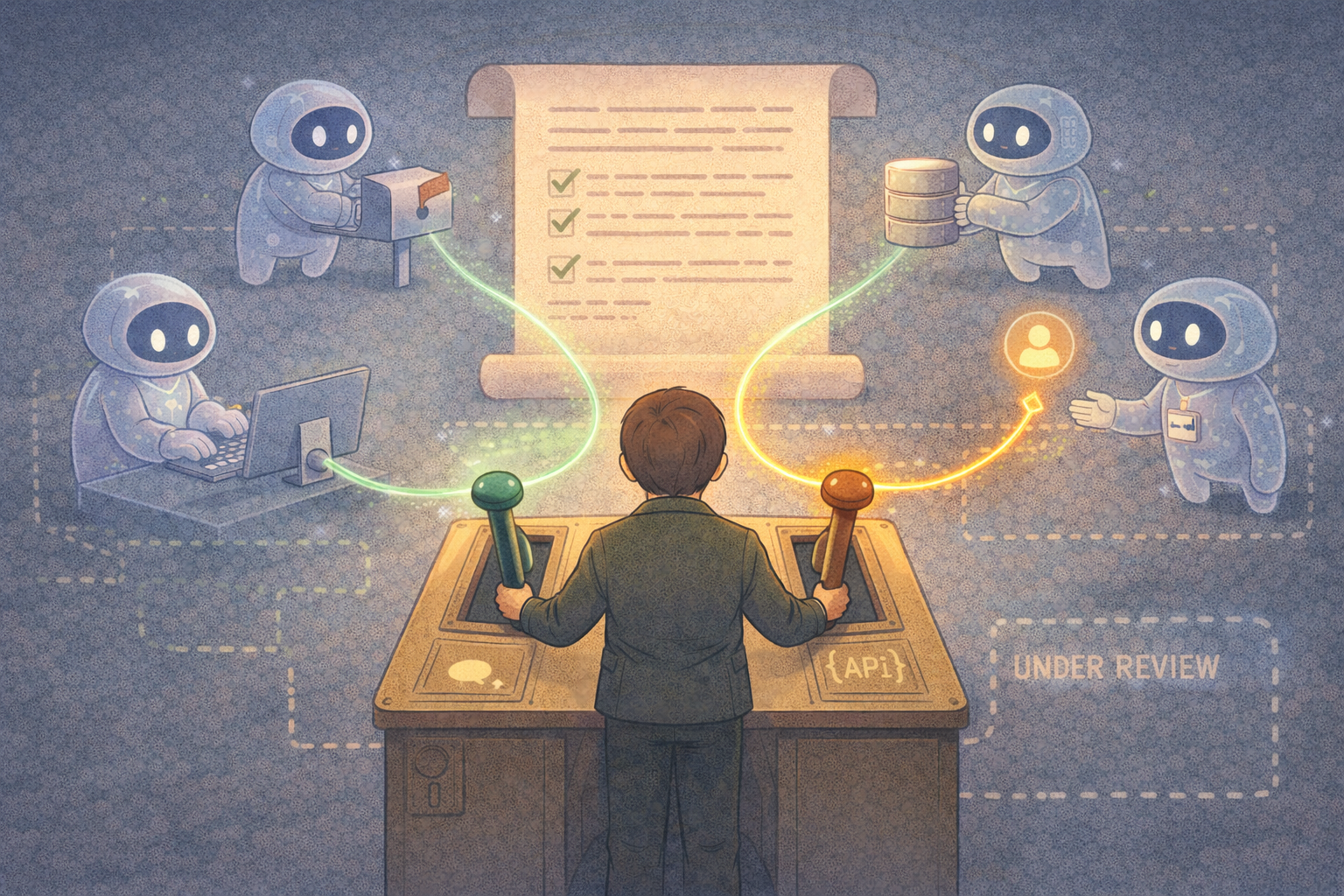

A compliance report says you're compliant. It doesn't mean you are.
This week the industry was reminded of that distinction when allegations surfaced that a well-funded compliance automation platform had been producing fabricated SOC 2, ISO 27001, HIPAA, and GDPR reports for hundreds of clients. Pre-written auditor conclusions. Identical boilerplate across 99% of reports. Audit firms that existed as shell entities. Hundreds of companies now holding compliance reports that may be worthless.
The details of this specific case will play out in investigations and legal proceedings. But the pattern it exposes is bigger than one company. It reveals a structural flaw in how the industry thinks about compliance: as a document to produce, not a state to maintain.
The Documentation Trap
Compliance automation became a category by solving a real problem: generating the documents that enterprise buyers and auditors require. SOC 2 reports, security questionnaires, policy documents, evidence packages. The pain was real. Teams were spending weeks assembling evidence manually. Deals were stalling because the paperwork wasn't ready.
The tools that emerged solved the paperwork problem. They connected to your infrastructure, pulled configuration data, generated evidence screenshots, and produced reports that looked professional and comprehensive. For many companies, this was transformative. What used to take months took weeks. What used to require expensive consultants could be handled with a SaaS subscription.
But somewhere along the way, the industry confused the document with the thing the document is supposed to represent. The SOC 2 report became the goal, not the security posture it's supposed to validate. The compliance badge became the product, not the controls it's supposed to certify.
When the goal is producing a document, the incentive structure drifts toward producing the document as efficiently as possible. Templates get reused. Boilerplate gets standardized. Auditor conclusions get pre-written. The report looks the same whether the company has rigorous controls or none at all, because the report was never generated from the controls. It was generated from a template.
This isn't just a vendor problem. It's a buyer problem. Enterprise security teams that accept a SOC 2 report as proof of security without verifying the underlying controls are trusting a document, not a system. And as this week demonstrated, documents can be fabricated. Systems can't.
Why Documents Are Easy to Fake and Enforcement Isn't
A compliance report is a static artifact. It represents a claim about a point in time. "During the audit period, these controls were in place." The report itself contains no mechanism to verify that claim. It depends entirely on the integrity of the auditor who produced it and the platform that generated the evidence.
Enforcement is different. Enforcement means that a policy exists, is active in production, evaluates every relevant action in real time, and produces an immutable record of every evaluation. You can't fake enforcement the way you can fake a report, because enforcement produces continuous evidence that is independently verifiable.
Consider the difference. A compliance report says: "The organization has a policy that prevents sensitive data from being shared externally." That sentence can be true, false, or somewhere in between. The report doesn't know.
An enforcement system shows: "Policy 'No PII in External Communications' was active from January 1 through March 31. During that period, 47,231 evaluations were performed. 142 violations were detected and blocked. Here are the violation records with timestamps, content snapshots, and enforcement actions taken."
The second version is verifiable. An auditor can examine the evaluation logs, check the policy version history, review specific violation records, and confirm that the system was operating continuously. There's no template to fake because the evidence is generated by the system doing its job, not by a human filling in a form.
The Three Layers of Real Compliance
The Delve-era model treated compliance as a single layer: generate the right documents. The model that replaces it needs three layers.
Layer 1: Policy definition. The organization's rules need to exist as enforceable, versioned artifacts. Not Word documents in a shared drive. Not wiki pages that haven't been updated in 18 months. Machine-readable rules that specify what's allowed, what's blocked, and what requires approval, scoped to specific surfaces (code, AI outputs, documents, email, messaging, agent actions).
Policy versioning matters because auditors need to know what rules were active during any given period. If a policy was changed on February 15, the audit trail should show what the policy said before and after the change, who made the change, and why.
Layer 2: Continuous enforcement. The policies need to be enforced in real time, not checked periodically. Every code commit, every AI output, every document share, every agent action should be evaluated against the active policies before it executes. Violations should be blocked, warned, or logged based on severity.
This is where the compliance-as-documentation model fundamentally breaks. A report can say controls exist. Enforcement proves controls operate. The difference is the difference between a fire alarm that's installed and a fire alarm that's tested every day and has a log of every test.
Layer 3: Evidence generation as a byproduct. The audit trail shouldn't be assembled before an audit. It should be generated automatically as a byproduct of enforcement running continuously. Every policy evaluation produces a record. Every violation produces a detailed log with context. Every enforcement action is timestamped and attributed.
When the auditor arrives, the evidence already exists. It wasn't prepared for the audit. It was produced by the system operating normally. This is the fundamental difference between compliance-as-documentation and compliance-as-enforcement. One produces evidence on demand. The other produces evidence continuously, whether anyone is watching or not.
What Enterprise Buyers Should Ask Now
If you're an enterprise security team evaluating vendors, this incident should change your evaluation criteria. The question is no longer "do you have a SOC 2 report?" The question is "how was the evidence in your SOC 2 report generated?"
Specifically, ask vendors these questions.
Are your compliance policies enforced in real time, or documented and reviewed periodically? The answer tells you whether the vendor's compliance is continuous or point-in-time.
Can you show me the evaluation logs for a specific policy during a specific time period? If the vendor can pull up a record of every time a policy was evaluated, every violation that was detected, and every enforcement action that was taken, their compliance is real. If they can only show you a PDF report, you're trusting a document.
Are your audit artifacts generated by your enforcement system, or prepared separately for audits? Evidence that's a natural byproduct of enforcement is inherently more trustworthy than evidence assembled specifically for an auditor. The first kind exists whether or not anyone asks for it. The second kind exists only because someone asked.
Who audited you, and can I verify their credentials independently? After this week, "we have a SOC 2" is no longer sufficient. Verify the auditing firm. Check their AICPA registration. Confirm they're not a shell entity.
What This Means for AI Governance
The timing of this scandal is significant because AI governance is following the exact same trajectory that SOC 2 compliance followed five years ago. Enterprise buyers are starting to ask "how do you govern your AI?" and the market is racing to produce the right documents.
The risk is that AI governance goes down the same path: platforms that generate impressive-looking governance reports without actually enforcing anything. A PDF that says "we have 47 AI policies" is no more trustworthy than a SOC 2 report that says "all controls are operating effectively" if neither is backed by continuous enforcement with verifiable evidence.
The organizations that will build real trust, with customers, with auditors, and with regulators, are the ones that can show enforcement, not just documentation. Policies that are active in production. Evaluations that run on every AI output. Violations that are caught and blocked before they reach users. Audit trails that prove governance was applied continuously, not prepared for a specific review.
The Trust Reset
This incident is a trust reset for the compliance industry. The companies that relied on fabricated reports will need to get re-audited by legitimate firms. The buyers who accepted those reports will need to re-evaluate their vendors. And the entire market will need to recalibrate what "being compliant" actually means.
The answer isn't more documents. It's enforcement that produces evidence continuously, whether anyone is watching or not.
A compliance report should be the output of a system that's been enforcing rules in production every day. It should not be a template that someone fills in to check a box. The organizations that understand this distinction will build real compliance infrastructure. The ones that don't will find themselves holding another worthless report the next time a scandal surfaces.
The era of compliance-as-documentation is ending. The era of compliance-as-enforcement is beginning. The question for every organization is which side of that transition they're on.
We're building Aguardic to make compliance-as-enforcement real for AI governance. Enforce your policies across code, AI outputs, documents, and agents in real time, with audit trails generated automatically. If you're rethinking what compliance should look like, take a look.